

-
Neutron protection for nuclear cameras
Radiation-hardened nuclear cameras are generally designed and qualified to withstand high levels of gamma radiation, which is the primary source of radiation damage in many nuclear facilities.
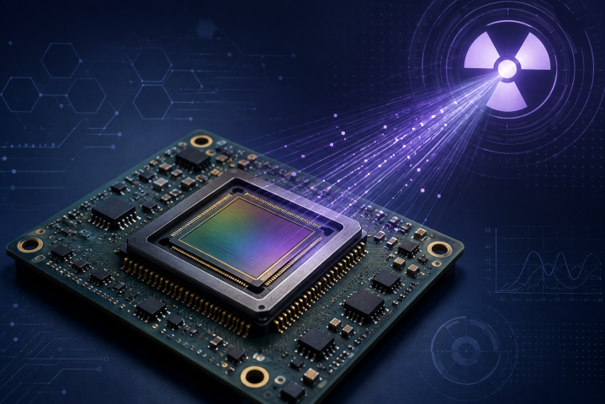
However, in some applications, neutron radiation can also represent a significant threat to camera performance and lifetime. Unlike gamma rays, neutrons interact directly with semiconductor materials, creating permanent defects within image sensors and electronic components. On image sensors, neutron strikes may produce characteristic clusters of damaged pixels or permanently disable individual pixels, progressively degrading image quality.
The effects of neutrons depend strongly on their energy. For simplicity, neutrons are commonly divided into two categories:
* Thermal neutrons, with energies typically in the electron-volt (eV) range;
* Fast neutrons, with energies in the mega-electron-volt (MeV) range.
Protection against thermal neutrons can often be achieved using relatively straightforward shielding techniques and appropriate material selection. In contrast, mitigating the effects of fast neutrons is considerably more challenging and generally requires dedicated design approaches, advanced materials, and extensive qualification testing.
Significant research on neutron protection for nuclear imaging systems was carried out in France during the 2010s. Drawing on this experience, AVESTIS Canada is available to share technical knowledge and support organizations facing neutron-related challenges in nuclear imaging applications.
-
A brief overview of radiation-resistant camera technologies
Cameras operating in radiation-exposed environments—such as hot cells, waste reprocessing facilities, reactor buildings and inspection areas—play a vital role in ensuring the safe operation of nuclear installations. Since these environments are inaccessible to personnel during operation, reliable imaging systems are essential for inspection, maintenance and remote handling.
Over the years, three main technological approaches have emerged to address these demanding applications.
Historically, tube-based cameras were the only available solution. They offered excellent radiation resistance, typically up to the megagray range, but suffered from significant limitations, including analogue video transmission, limited image quality, monochrome imaging and an intrinsic service life that could ultimately restrict their operational usefulness regardless of radiation exposure.
More recently, solid-state cameras based on sensor regeneration technologies have been developed. Although the underlying principles have been described in the scientific literature, their industrial implementation has proved highly challenging. Several ambitious development programmes encountered major technical obstacles despite substantial R&D investments, while successful implementations required many years of development. These technologies also raise important questions regarding the long-term availability of qualified electronic components and the need for strategic component stockpiling.
A third approach consists of designing electronic components with intrinsic radiation tolerance at the micro-design level. Although requiring extensive research and development efforts, this technology opens promising perspectives for future generations of high-performance radiation-resistant imaging systems.
No single technology is universally optimal. Each offers specific advantages and limitations depending on the radiation environment, expected operational lifetime, image quality requirements, maintenance strategy and overall project objectives.
AVESTIS Canada provides independent technical expertise to help nuclear operators evaluate these different approaches and identify the imaging solution best suited to their operational requirements.
-
Why specified radiation tests may fail to predict real industrial behavior
Radiation qualification is often reduced to standardized laboratory exposure. However, industrial nuclear environments introduce additional variables: dose rate effects, thermal constraints, cable behavior, cumulative degradation, and operational recovery dynmaics.
In practice, systems passing laboratory irradiation campaigns may still exhibit unexpected operational instability in real facilities due to combined environmental interactions that are absent from qualification setups.
Understanding the gap between qualification and operational reality often requires fiels experience accumulated over multiple deployment environments. AVESTIS Canada supports actors facing these challenges.

-
Distinguishing gamma and neutron effects on imaging systems
Performance degradation in radiation-exposed imaging systems is not always linked to the same physical mechanisms. Gamma radiation, thermal neutrons, fast neutrons, and mixed environments may affect sensors and electronics differently.
Identifying the dominant contributor can help guide technology choices and operational expectations in nuclear applications.
-
Why operators often specify 1 MGy cumulative dose - and whether it is always relevant
Historically, camera systems installed in highly exposed nuclear areas were mainly based on black-and-white tube cameras, whose qualifications tests were commonly performed up to 1 MGy cumulative dose. Over time, this value progressively became a de facto reference in technical specifications, often reproduced from supplier brochures and conservative engineering practices, sometimes without precise characterization of the actual radiation environment.
However, field experience shows that such extremely high cumulative doses are rarely reached in many nuclear applications - or only after periods exceeding the intrinsic operational lifetime of the camera itself, independently of radiation effects. Conversely, some specific applications may indeed require very high radiation tolerance.
A more application-oriented approach, based on realistic environmental conditions and operational objectives, can help optimize the selection of camera technologies and specifications, potentially leading to significant reductions in costs, maintenance constraints, qualification efforts, and deployment times.